
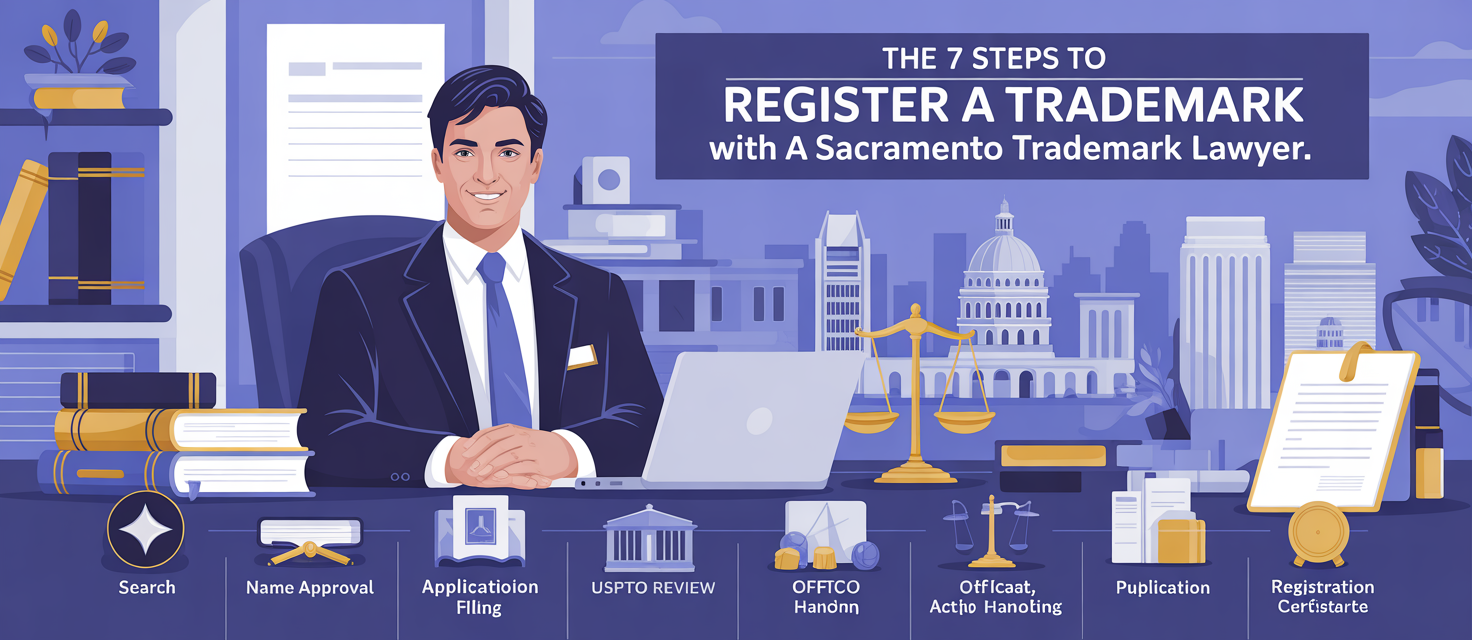
The 7 Steps to Register a Trademark with a Sacramento Trademark Lawyer
Sacramento is home to a fast-growing mix of tech startups, restaurants, logistics companies, creatives, ecommerce brands, and musicians. In a competitive business environment like this, your brand name, logo, or slogan is one of your most valuable assets—and protecting it early is critical.
We’ve helped businesses file 1,000+ trademark applications with the USPTO, including 500+ filings for California and Sacramento-based businesses. Based on that experience, here’s a clear, realistic breakdown of how to register a trademark in Sacramento the right way, step by step—with expert commentary at each stage.
Step 1: Confirm That Your Brand Is Actually a Trademark (Not Just a Business Name)
One of the most common misconceptions we see in Sacramento is confusing a business name (LLC or DBA) with a trademark.
- Registering an LLC with the California Secretary of State does not protect your brand nationally.
- A domain name or Instagram handle is not a trademark.
- Only a USPTO-registered trademark gives you nationwide rights.
Expert Commentary
We regularly speak with Sacramento founders who assume they’re protected because their business name was “approved.” Under U.S. law, that provides zero protection against someone else registering the same or a similar mark with the USPTO. Trademark rights work on a first-to-file basis, not first-to-form-an-LLC.
Step 2: Conduct a Professional Trademark Search (Beyond Google)
A proper trademark search is the foundation of a successful trademark application—and this is where most DIY filers fail.
A real trademark search should include:
- USPTO federal records
- Phonetically similar names
- Plural and misspelled variations
- Related industry classes that could block registration
Common Sacramento Mistakes We See
- Only checking Google or domain availability
- Picking names that sound “unique” but are legally too similar
- Ignoring logos or slogans already in use
Expert Commentary
Before filing, we conduct attorney-reviewed clearance searches to identify potential conflicts early. This step alone prevents costly rejections, Office Actions, and future legal disputes that commonly affect Sacramento startups and small businesses.
Step 3: Choose a Strong (Registrable) Trademark
Not all names can be protected—even if they sound good from a marketing perspective.
Weak Marks (High Risk)
- Generic names (e.g., “Sacramento Pizza”)
- Descriptive names without distinctiveness
- Common industry terms
Strong Marks (Low Risk)
- Invented or coined names
- Arbitrary names with no direct industry meaning
- Unique logos paired with distinctive wording
Expert Commentary
We guide Sacramento clients toward legally strong trademarks, not just creative ones. A weak mark may look appealing today but often results in rejection, limited protection, or enforcement problems later.
Step 4: Identify the Correct Trademark Owner & Classes
This step is far more technical than most people realize.
Key decisions include:
- Who owns the trademark? (Individual vs LLC vs Corporation)
- Which international trademark classes apply?
- How broad or narrow should protection be?
Why This Matters
Mistakes here often lead to:
- Rejection by the USPTO
- Forced refiling (and paying fees again)
- Ownership disputes later
Expert Commentary
We routinely correct errors for clients who previously filed on their own or through online platforms and selected the wrong owner or classes. Proper structuring protects your trademark long-term and keeps it enforceable.
Step 5: Prepare and File the USPTO Application Correctly
Once the strategy is set, the application must be:
- Accurately worded
- Supported by proper specimens (proof of use if applicable)
- Filed under the correct filing basis (use or intent-to-use)
Expert Commentary
Our filings are strategically drafted, not auto-generated. Language choices in the application directly affect approval timelines and enforcement strength. This is where attorney-led filings consistently outperform DIY submissions.
Step 6: Manage Office Actions and USPTO Communication
Many trademark applications receive an Office Action—a formal USPTO objection.
Common Office Action Issues
- Likelihood of confusion
- Descriptiveness refusals
- Specimen or technical errors
Expert Commentary
When Office Actions arise, we prepare legal arguments backed by trademark law and USPTO precedent, not generic responses. This controlled process is one of the main reasons attorney-filed trademarks are far more likely to reach registration successfully.
Step 7: Registration, Monitoring, and Long-Term Protection
After approval, your trademark is published and then registered. But protection doesn’t end there.
Post-registration includes:
- Monitoring for infringement
- Renewals and maintenance filings
- Brand enforcement as your business grows
Expert Commentary
Many Sacramento businesses lose trademarks simply due to missed deadlines or lack of monitoring. We help clients maintain and defend their trademarks to ensure long-term brand security.
Timeline: How Long Does Trademark Registration Take in Sacramento?
For most Sacramento businesses:
- 8 to 14 months is typical
- Delays are usually caused by:
- Incomplete searches
- Weak trademarks
- Improper filings
Attorney-guided applications generally move more efficiently and with fewer interruptions.
Lawyer vs DIY Trademark Filing: The Real Difference
Based on our experience:
- DIY filings often result in refusals, re-filings, or abandoned applications
- Errors usually cost more to fix than doing it right initially
- Attorney-led filings offer stronger legal protection and peace of mind
Foreign & Out-of-State Business Owners in Sacramento
We regularly assist:
- Non-US founders
- International startups operating in Sacramento
- Out-of-state companies expanding into California
Common Misunderstandings
- USPTO requires a licensed U.S. attorney for foreign applicants
- Ownership must be structured correctly from the start
- Trademark classes vary significantly by business model
Cost Transparency: What to Expect
Trademark costs typically include:
- USPTO filing fees (350$/class)
- Legal service fees (595$)
Why Errors Increase Costs
Incorrect filings often require:
- New applications
- Additional legal responses
- Loss of filing priority
Doing it right the first time is almost always more cost-effective.
Why Choose a Sacramento Trademark Lawyer Instead of a Generic Service?
What sets our approach apart:
- Attorney-reviewed trademark searches
- Strategic class and ownership selection
- Custom-drafted USPTO applications
- Real experience with 500+ California and Sacramento filings
- Ongoing post-registration protection
Online platforms file forms—we protect brands.
Final Thoughts: Protect Your Sacramento Brand with Confidence
Trademark registration isn’t just paperwork—it’s a legal strategy. Whether you’re a startup, restaurant owner, ecommerce seller, or creative professional in Sacramento, working with an experienced trademark lawyer dramatically increases your chances of success.
If you’re serious about protecting your brand, start with a proper trademark strategy—not guesswork.