

If you own a business in California, your business name is one of your most valuable assets. Whether you operate a local shop, a service-based company, or an online brand, protecting your name early can prevent costly disputes and rebranding later.
This guide explains how to trademark a business name in California, what your options are, and—most importantly—which type of trademark makes sense for your business. We’ll break it down in simple terms so you can make the right decision with confidence.
What Does It Mean to Trademark a Business Name in California?

Trademarking a business name means legally securing exclusive rights to use that name in connection with your goods or services. A trademark protects your brand identity and helps stop others from using a confusingly similar name.
It’s important to understand what does not count as trademark protection:
- Registering an LLC or corporation does not protect your brand name
- Buying a domain name does not create trademark rights
- Owning social media handles does not grant legal protection
- Filing a DBA (Doing Business As) is not the same as a trademark
Only a trademark registration gives you enforceable brand rights.
California Trademark vs Federal Trademark: Which One Do You Need?
California business owners often get confused between state trademarks and federal trademarks. The right choice depends on how and where you operate your business.
California State Trademark
A California state trademark is filed through the California Secretary of State and protects your name only within California.
Best for:
- Brick-and-mortar businesses operating only in California
- Businesses with no online or interstate sales
- Brands that are testing the market locally
Limitations:
- No protection outside California
- Cannot use the ® symbol
- Limited enforcement power
Federal Trademark (USPTO)
A federal trademark is filed with the U.S. Patent and Trademark Office (USPTO) and provides nationwide protection.
Best for:
- Online businesses
- Service providers working across state lines
- E-commerce brands
- Businesses planning to scale or franchise
Benefits:
- Nationwide legal protection
- Right to use the ® symbol
- Stronger enforcement and brand value
👉 Most growing California businesses are better protected with a federal trademark, even if they are based in one state.
Step-by-Step: How to Trademark a Business Name in California

Step 1: Conduct a Proper Trademark Search
Before filing, you must confirm your business name is legally available.
A proper search includes:
- USPTO trademark database
- California state trademark database
- Business name records
- Online and marketplace usage
Skipping this step is the #1 reason trademarks get rejected.
Step 2: Confirm Eligibility
To register a California state trademark, the name must already be in use in California commerce.
For a federal trademark, you can file based on:
- Current use in commerce, or
- Intent to use (if you plan to launch soon)
Step 3: Choose the Correct Trademark Class
Trademarks are categorized into classes based on goods or services.
Examples:
- Restaurants → Class 43
- Clothing → Class 25
- Consulting services → Class 35
Choosing the wrong class can make your trademark useless or unprotected.
Step 4: Prepare Proper Specimens
A specimen shows how your business name is actually used.
Acceptable examples:
- Website showing the business name
- Product packaging
- Invoices or signage
Unacceptable examples:
- Social media profiles alone
- Draft logos
- Business plans
Step 5: File the Application
You can file:
- California trademark via BizFile California
- Federal trademark via USPTO TEAS application
Government fees:
- California trademark: $70 per class
- Federal trademark: $350 per class
Step 6: Respond to Office Actions (If Issued)
If the examiner finds issues—such as similarity or improper specimens—you’ll receive an Office Action.
Failure to respond correctly and on time will result in abandonment of your application.
This is where many DIY filings fail.
Step 7: Publication & Approval
If approved:
- Your California trademark is published for opposition
- Your federal trademark enters a 30-day opposition period
If no opposition is filed, registration proceeds.
Step 8: Receive Your Trademark Certificate
Once approved, your business name is officially registered.
From this point forward, you have enforceable trademark rights within the applicable jurisdiction.
Common Mistakes California Business Owners Make

- Filing without a trademark search
- Believing an LLC name is protected
- Choosing the wrong class
- Filing a logo when they want name protection
- Not responding properly to Office Actions
- Missing renewal deadlines
These mistakes often cost more than hiring an attorney from the start.
How Long Does It Take to Trademark a Business Name in California?
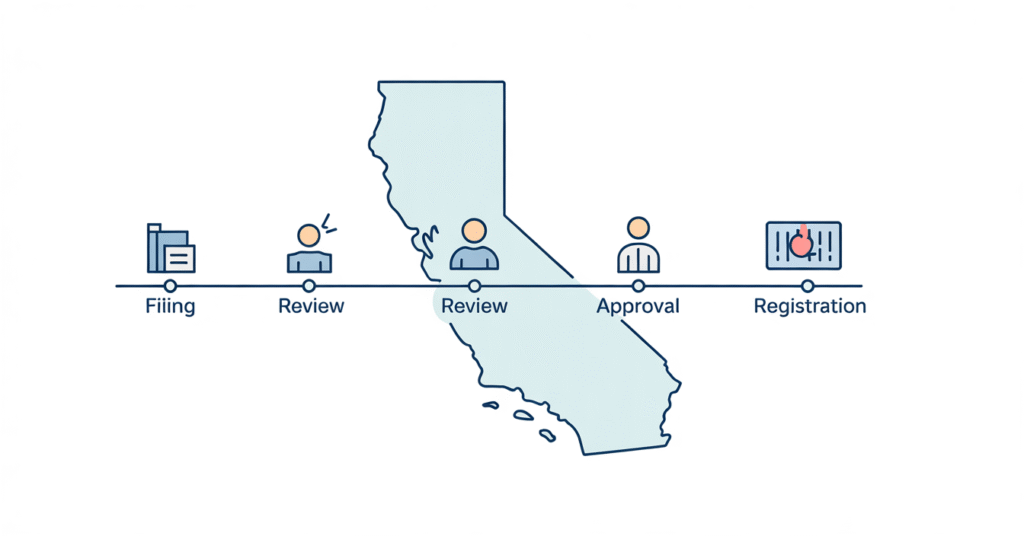
- California state trademark: 1–2 months (average)
- Federal trademark: 8–12 months (sometimes longer)
Delays are common if Office Actions or objections arise.
How Much Does It Cost To Trademark A Business Name In California?

The total cost to trademark a business name in California depends on where you file (state or federal) and whether you hire a trademark attorney. Understanding the difference helps you budget correctly and avoid unexpected expenses.
Government Filing Fees (Required)
If you file on your own, the only mandatory costs are the government filing fees:
- California State Trademark:
The California Secretary of State charges $70 per class of goods or services. This registration protects your business name only within California and is typically processed faster than a federal trademark. - Federal Trademark (USPTO):
The U.S. Patent and Trademark Office charges $350 per class. A federal trademark provides nationwide protection and is generally recommended for businesses that sell online, operate across state lines, or plan to expand beyond California.
Each class represents a different category of goods or services, so businesses offering multiple products or services may need to file in more than one class.
Attorney Fees (Optional but Recommended)
Attorney fees are separate from government fees and vary based on several factors, including:
- The depth of the trademark search
- Whether your business name has potential conflicts
- The number of classes being filed
- Whether the application receives an Office Action
- The level of legal guidance you need
Some businesses choose to file on their own to save money upfront, but filing errors or missed conflicts can lead to rejections, refiling fees, or lost trademark rights—which often costs more in the long run.
What Most California Businesses Actually Spend
In practice, many California business owners budget for:
- Government filing fees (state or federal)
- Professional assistance to ensure accuracy and long-term protection
Investing in proper trademark registration can prevent costly disputes, rebranding, or legal challenges later.
Do You Need a California Trademark Attorney?

You are allowed to file on your own, but working with a California trademark attorney helps reduce the risk of rejection, avoid costly refiling, handle Office Actions, ensure correct trademark classification, and protect the long-term value of your brand. For businesses serious about building and protecting their brand in California, professional legal guidance is often worth it.
- Reduce rejection risk
- Avoid costly refiling
- Handle Office Actions
- Ensure correct classification
- Protect long-term brand value
For businesses serious about their brand, legal guidance is often worth it.
Maintaining and Protecting Your Trademark
After registration:
- California trademarks must be renewed every 5 years
- Monitor for similar marks
- Take action against infringement
- Consider upgrading to federal protection if you expand
Frequently Asked Questions
Can I trademark my LLC name in California?
Yes, if it meets trademark requirements and isn’t already in use.
Can two businesses use the same name in California?
Possibly, if they operate in different industries and there’s no confusion.
Can I trademark a name before launching?
Yes, through an intent-to-use federal application.
Should I trademark the name or logo first?
The name usually offers broader protection.
Can I use the ® symbol with a California trademark?
No. The ® symbol is only for federally registered trademarks.
Protect Your Business Name the Right Way
Trademarking a business name in California isn’t just a legal step—it’s a strategic decision that affects your brand’s future.
Working with a knowledgeable trademark attorney can help ensure your application is done correctly, efficiently, and with long-term protection in mind.
If you want clarity, accuracy, and professional guidance, a Sacramento-based trademark attorney can help you protect what you’ve built—before someone else claims it.